Missing Lou Krieger

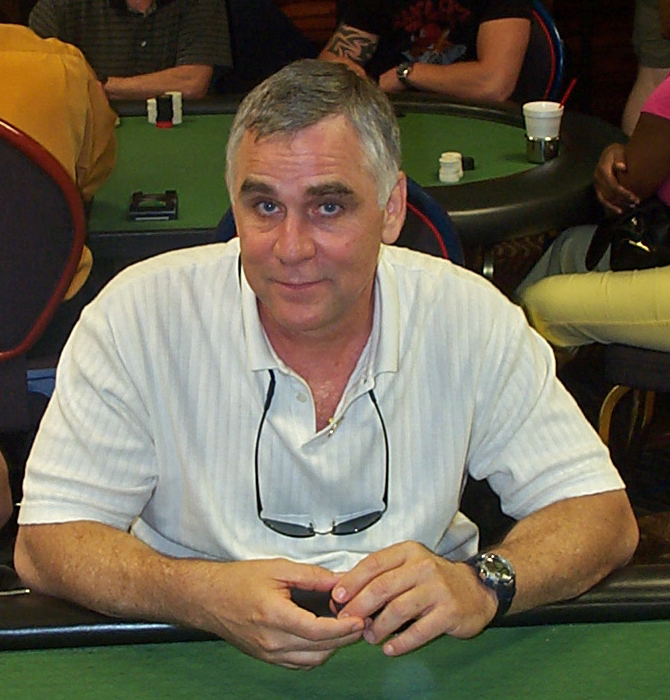
On December 3, the noted poker author and my friend Lou Krieger died of cancer. There are so many things to be said about Lou’s contributions to the poker world and how he nurtured a new generation of poker writers. But this is what I said on Hold’em Radio’s tribute show to Lou. I want to thank Dan and Shari for letting me share my memories of Lou.

When I first started to learn poker, I of course read some of Lou’s books. But I didn’t meet him until January 2003 at Jack Binion’s World Poker Open in Tunica Mississippi. I saw him playing in a $10/$20 game. I introduced myself to him and I told him that I’d love to talk to him about a poker writing project some time. He immediately started racking up his chips. I told him to stay and play. But he smiled and said, “Naw. C’mon, let’s talk poker.” And that’s where our friendship was born — over sweet tea and bagels (clearly a regional gastronomical dichotomy).

Lou got me my first poker writing job with Canadian Poker Player Magazine. When Bluff Magazine was starting up, Lou advised them to take me on. When he first started with Hold’em Radio, he invited me to be his co-host. I told him I thought preparing for the show might take a lot of work. He burst out laughing and reminded me that we already talked about poker every week for hours on end. He said we’d do what we always did — we’d just let people listen and join in. He always believed that poker was at its best when it was shared.

I’m sure you’re going to hear from a lot of other people in the poker media with similar stories. Like me, they’ll tell you about how Lou encouraged them and gave them a helping hand. Lou was generous and kind. But I don’t think that was his only motivation for helping out writers who wanted to break into the business. Lou loved poker. He loved writing about poker. It truly made him happy. And I think he thought writing about poker would make us all happy too. And of course, he was right.

When it came to writing about poker, Lou was a master. Lou’s gift was being able to communicate complex ideas simply. He also was what I call an unselfish writer. It was never about how clever and smart a player he was — and he was. It was always about how the reader could become a clever and smarter player. Lou’s body of work will live on to serve the next generation of poker players and maybe beyond.

I got to share some great poker moments with Lou. We sat in the bleachers of Benny’s Bullpen, watching the last WSOP preliminary events that would be played down at Binions. We went to the taping of the first televised WPT Championship event — which changed how poker would be viewed by a wider audience. We spent hours on the phone as Chris Moneymaker made his final bid for the WSOP Championship. I had the profound privilege of watching the changing landscape of poker through Lou’s eyes. And it breaks my heart that those eyes have closed. I know the poker world — and I — will truly miss him.

Gasoline Prices: The Good, the Bad, and the Ugly

Today crude oil prices turned lower on speculation that the U.K. and U.S. might coordinate a release from of their strategic oil reserves. If true, it is probably motivated by a desire to shake out speculators. (I wrote about this strategy in a previous post here.) In the short-term, it may even tamp down gasoline prices. Unfortunately, it will do little to stop the well-meaning, but misguided, flow of energy policy rhetoric.

Some people are sure the answer is “Drill Baby Drill.” Others are convinced the answer can be found in conservation. Both camps believe their approach would result in lower gasoline prices in the U.S.

I’ve got some good news and some bad news for y’all.

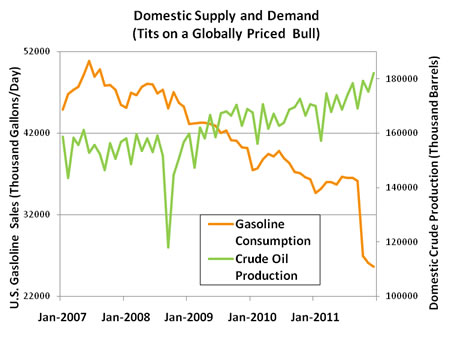
In the last five years, the U.S. has ramped up crude oil production. And whether its because of the flagging economy, higher unemployment, more fuel efficient cars, or the mainstream adoption of GPS (reducing the number of lost drivers unwilling to embarrass themselves by asking for directions) — the consumption of gasoline has dropped dramatically in the U.S.

We’re relatively awash in gasoline. So much so, the U.S. became a net exporter of gasoline in December 2011 — the first time in 50 years. Some analysts believe this trend will continue.

With this double whammy of increased supply and decreased demand, gasoline should practically be free. But of course it’s not. Gasoline prices are running about 8% higher than last year’s already-lofty levels. That’s because gasoline prices aren’t determined by domestic supply and demand. Gasoline prices are, by and large, set in a world market — and the world is worried about tensions in Iran and what that could potentially do to world oil and gasoline supplies.

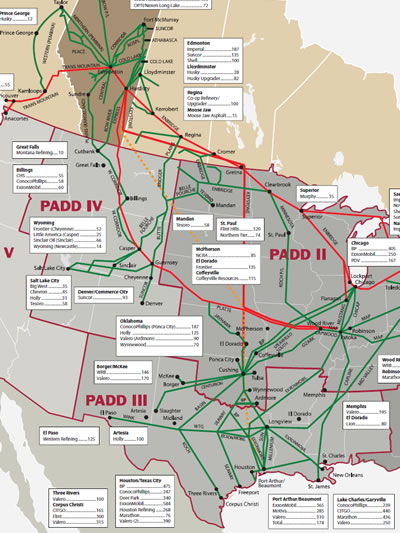
(Pipeline map. Full size image available here)

Have you seen the commercials that portray the Keystone XL pipeline as a magical cure for unemployment and domestic energy supply. It probably would result in jobs. Folks would find some nice short-term work building the pipeline. The Keystone extension could boost refinery jobs on the Gulf Coast. And oil exporters — they’ll get some business — ’cause that Canadian oil isn’t planning on staying here.

There is adequate pipeline capacity to get that gooey tar sands oil from Canada to the U.S. market in Cushing, OK. But that’s not what Canada needs. Over 95% of Canadian crude exports end up in the U.S. market, and Canada wants to diversify its trading portfolio. At least that’s what Canada’s Minster of natural Resources said in this open letter. Canada wants its oil piped to a port (as in export).

Canada isn’t alone. Even the US producers want to escape the glut in the US market. Based on this increased demand to export, Magellan Midstream Partners just announced it would expand its pipeline capacity to the Gulf Coast — moving more West Texas oil to the port.

I’m all for a comprehensive domestic energy policy. We’ve basically been winging it for the last few decades. But its goals have to be grounded on the realities of a world market — not an appealing populist argument built on the fantasy of domestic price setting.

Home = A Place You Can Scratch What Itches

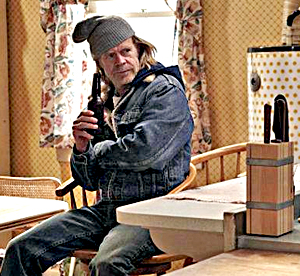
It’s like going home again. And by home, I don’t mean to invoke a Rockwellian ideal, baked in nostalgic fantasy. On the scale of dysfunction, it’s probably closer to Shameless than it is to Ozzie and Harriet. But by every measure, Dan Michalski and Pokerati are family.

This January, I started contributing to Pokerati, providing a few posts a month about the poker and gaming business. I still have my investment day job. And I’ll still navel gaze here on Aimlessly. But Dan made me an offer I couldn’t refuse: an outlet to write about the wildest and whackiest sector in the world, bar none. (And an opportunity, once again, to write-off my trips to Vegas as a business expense)

I first met Dan in the summer of 2004. He and Jay Greenspan were at my starting table of the Mid-America Poker Classic media event in Tunica, Mississippi. As I recall, Dan and Jay were both ex-editors of the now-defunct All-In Magazine. (At that point in time, All-In may have burned through more editors than it had released issues.) Read More »

With Apologies to Douglas Adams, Nassim Taleb and Every Major Religion: Why Investors Should Learn Poker in 2012

“It is not that there are no certainties, it is that it is an absolute certainty that there are no certainties.” Christopher Hitchens (1949-2011) from Hitch-22: A Memoir

In Douglas Adams’ book Life, the Universe and Everything, the computer Deep Thought comes up with the Ultimate Answer to the Ultimate Question of Life, The Universe and Everything. The answer is 42. Unfortunately, the actual question is not known.
In the planet we inhabit, the reverse is often the case. We have questions for which there are no constant, neat and tidy, answers. We fall back on political ideologies, religious tenets, anecdotal experience, artistic genres and/or academic disciplines to give us a belief structure that we sometimes confound with fixed truths. Even when we are confronted with evidence that we aren’t wholly right — because something has changed, more information becomes available or the possible, but improbable, has occurred — it’s hard to let go of our constructed answer.

In the recent past, we’ve struggled to let go of these treasured “truths.”

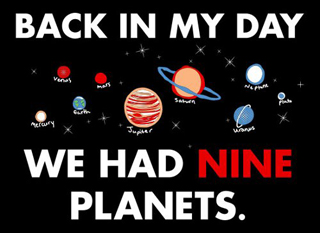
Pluto is a planet

A house is a good investment

The stock market is a rational determinant of prices and a productive use of capital

Sometimes the Insignificant Isn’t

When I first started at IBM as a chemical engineer, I was responsible for a manufacturing process that was part of our semiconductor packaging line. It was a good place for a new engineer to start. The process to dispense and cure a polymer over the top of a chip and ceramic package was a mature and stable process. But one day, the polymer stopped curing. Read More »

Open Letter to Herb Greenberg: The Problem is Unemployment, not Unemployment Insurance

I like CNBC’s senior stock analyst Herb Greenberg. I generally count on him for his solid and thorough research. But last week, he wandered off into an anecdotal wilderness. So this is to Herb, in honor of Labor Day.

Dear Herb,

I watched some of your CNBC “coverage” on unemployment insurance, where you implied that people would rather collect unemployment insurance than work. I do believe there are some people who go through the motions of a job search just to collect unemployment insurance. There is even evidence to suggest that unemployment insurance can delay workforce participation. But in this economy, your broad-brush proposition bordered on the absurd.

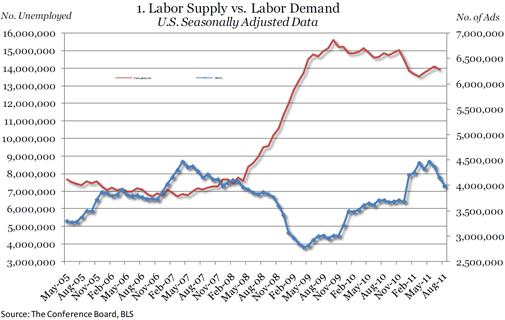
Had you researched this half as well as you research stocks, you might have realized that countries like Germany have much more generous unemployment benefits, yet much higher labor participations rates, than we do right now. Or maybe you would have reviewed the latest Help Wanted Index from The Conference Board and realized that a dearth of labor supply was hardly the issue.

Or maybe you would have investigated the studies that concluded workers were more willing to rejoin the workforce only after their unemployment benefits ran out — just as carefully as you investigate a company’s balance sheet. Some of them studied time periods when labor markets were tight and the penalty for delaying a job search was minimal. But we don’t have a tight labor market today. Few people assume they can just go out and get a job tomorrow. Read More »

Complicit Regulators: The US Federal Reserve and the Alderney Gambling Control Commission


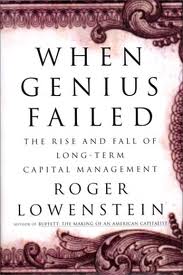
Thirteen years ago today, James G. Rickards received a phone call: “Jim, we just lost 500 million; you’d better get back to Greenwich.” Soon after, he would be called upon to broker a $3.6 billion bailout of the hedge fund Long Term Capital Management (LTCM). It was paid for by big banks and orchestrated by the NY Federal Reserve.

Rickards said, “What strikes me now, looking back, is how nothing was changed: no lessons were applied. Even though the lessons were obvious, in 1998. […] Regulatory oversight needed to be ramped up […] The government did just the opposite. Glass-Steagall was repealed in 1999, so that banks could become hedge funds. The U.S., in effect stared near-catastrophe in the eye, with LTCM, and decided to double down.”

One bias of our capitalist system is that we believe profit is the mark of a functioning system. As a result, regulation is seldom sought to control money-making enterprises. There is an implied message: If it ain’t broke, don’t fix it.

On the flip side, losses are frequently pinned on needless and overly aggressive regulation. No one ever wants to kick an industry while it’s down. As a result, squeaky losers generally get rewarded with deregulation.

Even when a regulatory weakness or failure leads to disaster — a la Enron, Madoff, LTCM, Lehman Brothers, and Full Tilt Poker — anti-regulatory bias, fueled by industry lobbying coffers, eventually trumps temporary populist outrage and public risk.

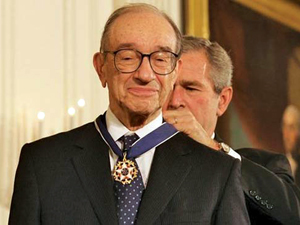
I’m no Ron Paul. But I’m not a member of the U.S. Federal Reserve’s fan club either. While it may have helped the financial system from collapsing in 2008, the Fed was instrumental in removing key foundation blocks that had held it in place since the Depression.

One of the Fed’s primary tasks is to regulate the banks. But as is often the case, the regulators forged a cozy bond with the regulated — and the Fed became one of the early and powerful champions of bank deregulation.

When early attempts by Congress to weaken the Glass-Steagall Act failed, the Federal Reserve unilaterally “reinterpreted” the section of the law that had restricted commercial banks from dealing in securities. Starting in the mid-1980s, the Fed voted to allow bank holding companies to derive up to five percent of their revenues from trading in a narrow range of securities. By the mid-1990s, following a series of “reinterpretations,” the Fed allowed 45 percent of bank revenues to come from dealing in a wide range of securities.

The proposed merger of Citi Bank and Travelers in 1998 — and $300 million of bank lobby money — finally enticed Congress to pass the Graham-Leach-Bliley Act in 1999, codifying the Federal Reserve’s wishes and the banking industry’s wet dream.

With a clean license to deal, the primary growth engine for banks became securitization — or the repackaging of debt, like mortgages. Fostered by both loose and unenforced regulation, the securitization market ballooned to roughly $10 trillion in the US by 2008.

I liked online poker. But I was never a fan of an unregulated or self-regulated poker industry. For one thing, its infancy was marked by a notable regulatory disaster. When the fledgling online company PokerSpot run by Dutch Boyd suffered financial difficulties, it raided players’ accounts in an attempt to stay afloat. It eventually wiped out every deposit on its journey into the abyss.

PokerSpot’s early failure was written off as a rogue fraud — but it was a regulatory harbinger.

In the early 2000s, new online poker companies blossomed and thrived. They made so much money a few of them even launched successful IPOs. With billions on the line, the new companies aligned themselves with agencies that promised regulatory cover.

Alderney, the third largest of the Channel Islands, played host to one of these regulatory bodies. In “licensing” Full Tilt Poker (FTP), the Alderney Gambling Control Commission scored a big fish. Since FTP was so profitable and big, Alderney allowed it some regulatory slack. Instead of requiring the company to segregate or “ring fence” player accounts, it allowed the company to co-mingle player accounts with the company’s business accounts.

In December 2010, it was widely known (as F-Train documents here) that the Department of Justice was investigating online poker’s payment processors. Even then, neither FTP nor Alderney did anything to insure the safety of player funds. On April 15, 2011 (Black Friday) FTP’s business accounts were seized by the Department of Justice. FTP stated it was unable to reimburse players’ money due to the seizure. Even today, it is unknown whether there are adequate funds to cover the player accounts and there are rumors of a $60 million shortfall.

On June 29, Alderney suspended Full Tilt’s gaming licenses, well after the horses had left the barn.

Michele Davis: “And what do I say when they ask me why it wasn’t regulated?”
Hank Paulson: “No one wanted to; they were making too much money.”
From the 2011 HBO movie “Too Big to Fail”

Pokerboyz Minus One: RIP rggator

When we all met 10 years ago - first on the internet, soon after in “real life” - it was clear we collectively had fewer years ahead of us than behind us. We weren’t young. And poker, after all, wasn’t the only vice we shared. But in an unofficial poll, Randy didn’t make anyone’s top pick in the pokerboyz’ dead pool. As someone who loved the ponies, however, Randy may have preferred to go off on long odds. Read More »

The IEA Beaned the Mascot and the Anatomy of a Bluff

“I wouldn’t dig in if I was you. Next one might be at your head. I don’t know where it’s gonna go. Swear to God “- Crash Davis

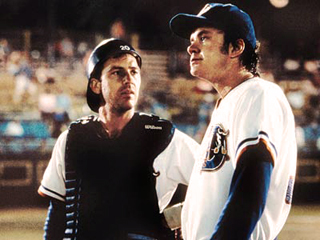
In the movie Bull Durham, veteran catcher Crash Davis advises rookie Nuke LaLoosh to bean the team’s mascot. This bluffed lack of control convinces the batter to stop crowding the plate.

Last week, the International Energy Association (IEA) announced that it would be releasing 60 million barrels of oil from the world’s strategic oil reserves. On the face of it, it was an odd move. Oil prices were already starting to move down from their spring highs. Although Libya has put less oil in the market, global oil supplies appear adequate to fuel the world’s muting economies. And 60 million barrels is not that sizeable an outflow, equating to less than one day of global demand. Yet oil prices swooned on the news.

Financial talking heads, confounded by the move, came up with the following theses: a) the IEA is stupid as all government and quasi-government agencies are, b) the economy must be in bigger trouble than we know if the IEA had to pull this kind of desperation move, or c) it was an Obama-inspired political move to marginally help the US economy and placate voters.

Someone from work stepped into my office and started spewing the “stupid” theory. I looked up and said,

“You got it wrong. The IEA beaned the mascot. They’re bluffing. And every oil trader either knows it or will figure it out in the next ten minutes.”

“If everyone knows it’s a bluff, it won’t work. They’ll just drive the price back up.”

“You’ve never played poker, apparently,” I replied. Read More »

What Poker Could Have Taught This Harvard Professor Re: Social Capital

Harvard Professor Robert Putnam has been recognized for his contribution to political science. According to Wikipedia, he “has been elected to the American Academy of Arts and Sciences (1980), the Council on Foreign Relations (1981), the National Academy of Sciences (2001), and the American Philosophical Society (2005). He was the President of the American Political Science Association (2001–2002). He is the recipient of the Wilbur Cross Medal of Yale Graduate School of Arts and Sciences for outstanding career achievement (2003). In 2006 Robert Putnam received the Johan Skytte Prize for the most valuable contribution to political science.”

But he really should have been recognized for his total lack of vision.

In his seminal (and I mean that for its politically incorrect connotation) 1995 work, “Bowling Alone: America’s Declining Social Capital,” Putnam bemoans the loss of community. His evidence that social capital is declining rests on eroding membership in women’s charity groups and bowling leagues. The culprits of our societal demise are women in the workforce and the advent of technology that he suspected was “driving a wedge between our individual interests and our collective interests.”

Technology, in Putnam’s view, was isolating and self-centered.

Some may try to cut Putnam some slack. After all, it was 1995 — roughly a decade before the launch of social networking sites like My Space and Facebook. But social networking was alive and well long before grandma started posting pictures on Zuckerberg’s virtual corporate walls. Read More »

The Poker Players Alliance is a Lobby - Not Online Poker’s Personal Savior

I’ve seen some bashing of the Poker Players Alliance (PPA) in the wake of DOJ indictments involving three online poker sites. I’m not a particular fan of the PPA. But I dislike lobbying organizations in general.

If online poker sites were engaged in bank fraud as alleged, I’m not sure how the PPA is to blame. Maybe my expectations of the lobbying group are different than the expectations of its members. But that difference could be costly for the PPA in the near future.

The PPA purports to be a grass roots organization defending players’ rights. In reality, it is an organization fostering an agenda consistent with businesses who want to operate in a lucrative, regulated, US online poker market. Read More »